
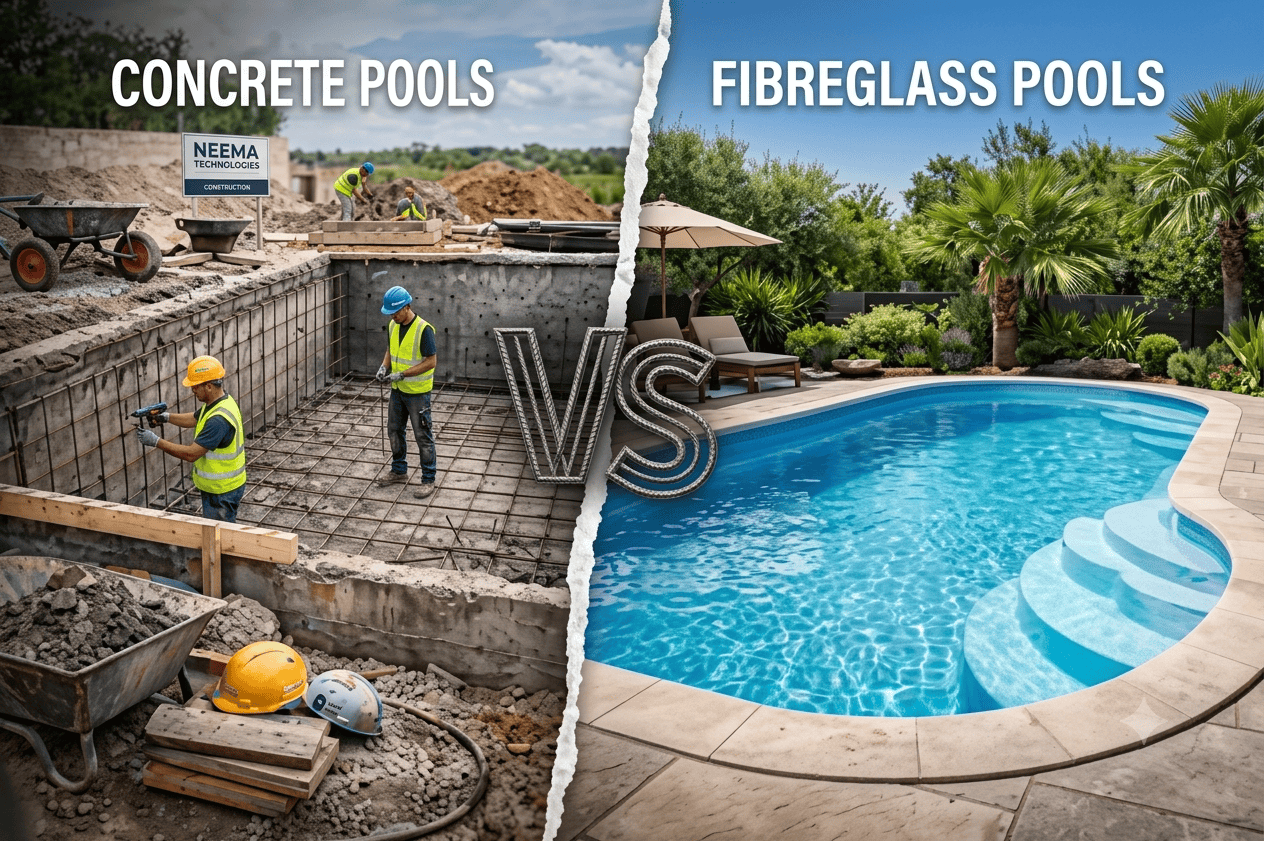
If you have ever researched options for adding a pool to your property, you already know that the very first technical crossroad you will reach is choosing your building material. In the market, the two undisputed heavyweights are reinforced concrete and prefabricated fiberglass.
Finding clear, localized information that outlines exactly why these materials are popular, their structural tradeoffs, and their real capital costs can be incredibly difficult. This comprehensive guide breaks down both options thoroughly, giving you all the necessary data to choose the perfect design for your property.
Key Takeaways
- Customization vs. Speed: Concrete pools offer limitless customization and design flexibility but come with higher initial capital requirements and intensive long-term maintenance. Fiberglass pools offer a perfectly smooth feel, lower chemical demands, and rapid installation.
- Asset Lifespan: Both concrete and fiberglass installations have the engineering potential to last for 50 years or more when constructed and maintained using professional technical standards.
- Property Valuation: Incorporating modern luxury features and technological upgrades significantly enhances the user experience while increasing the real estate appraisal value of homes in prime Kenyan residential hubs.
1. Concrete Swimming Pools
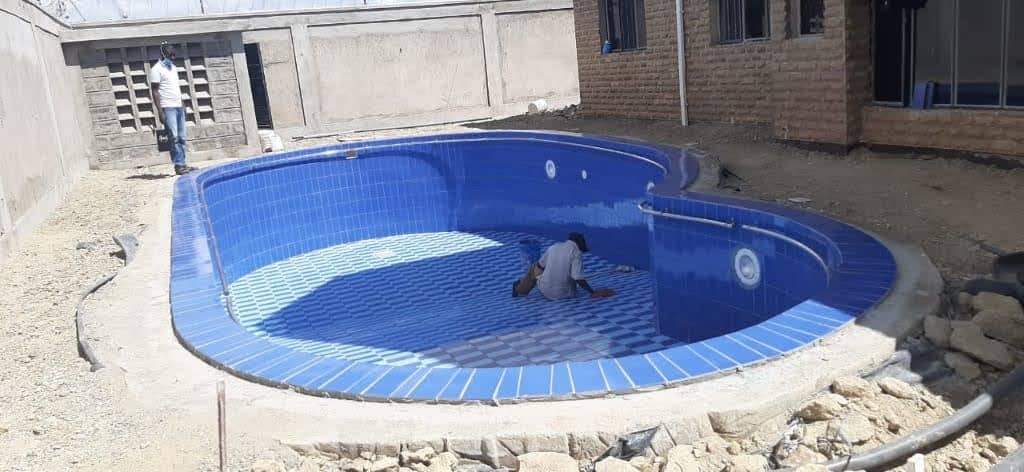
The Real Cost of a Concrete Pool
In Kenya, a professional concrete swimming pool construction project typically ranges from KES 2,500,000 to over KES 6,500,000+ (equivalent to approximately $20,000 to $50,000+ depending on currency valuations). The total budget is influenced by several key engineering factors:
A. Construction Methodology
- Cast-in-Place (Shotcrete/Gunite): This highly custom onsite method involves building a dense steel rebar framework directly within the excavated pit, then pouring or pneumatically spraying high-grade concrete. It requires extensive framework and a mandatory 28-day structural curing window.
- Precast Concrete Blocks: Prefabricated sections are molded under strict factory conditions and transported to the site. This reduces onsite installation time but limits extreme geometric customization.
B. Dimensions and Volumetric Scale
The physical footprint directly dictates material costs.
- A small concrete pool measuring 6m by 3m requires a baseline investment of at least KES 2,500,000.
- A standard large family or commercial pool measuring 10m by 5m and above scales upward from KES 4,500,000+.
C. Premium Features and Customization
A basic structural package includes the structural concrete shell, standard marble-dust plaster or tile interior finish, perimeter coping stones, plumbing lines, skimmers, and a basic pump/sand filter system. Upgrading your configuration increases your structural returns and capital layout:
- Smart LED or color-changing underwater lights
- Solar-assisted or heat-pump pool heating systems
- Automated saltwater chlorination units (eliminates raw chlorine handling)
- Retractable automated pool security covers
- Architectural waterfalls, infinity edges, or fountains
D. Site Accessibility and Soil Preparation
Site accessibility refers to how easily heavy excavation equipment and transit concrete mixers can access your backyard. Narrow gates, steep inclines, or structural obstacles require specialized manual labor or concrete boom pumps, which increases equipment hire overheads.
Furthermore, site preparation on expansive black cotton soil (common in parts of Ruiru, Syokimau, and Kitengela) demands complete soil replacement with compacted murram or thick raft slab engineering to prevent future structural cracking.
Advantages of Concrete Pools
- Limitless Geometric Customization: Because concrete takes the shape of any framework, you can design any layout imaginable, including classic rectangular, kidney-shaped, L-shaped, freeform, or zero-entry infinity pools.
- Unmatched Structural Longevity: When poured and vibrated correctly, a reinforced concrete pool withstands intense hydrostatic pressures and environmental shifts, lasting well over 50 years.
- Versatility in Interior Finishes: You can finish the interior with polished glass aggregates, classic colored plaster, or premium fully tiled mosaic ceramic or quartz surfaces.
- Substantial Impact on Property Value: In premium local real estate developments (such as Karen, Runda, or luxury coastal plots in Watamu and Diani), a professionally engineered concrete pool can increase overall property valuation by KES 5,000,000 to KES 15,000,000, serving as a highly permanent real estate asset.
Disadvantages of Concrete Pools
- Higher Capital Entry Point: Upfront civil works, steel reinforcement, and extensive professional masonry labor make it the most expensive pool type to construct.
- Porous Surface Upkeep: Un-tiled concrete or plaster finishes are naturally porous, meaning they harbor algae spores easily. This requires a higher baseline use of sanitizing chemicals and vigorous weekly brushing.
2. Fiberglass Swimming Pools
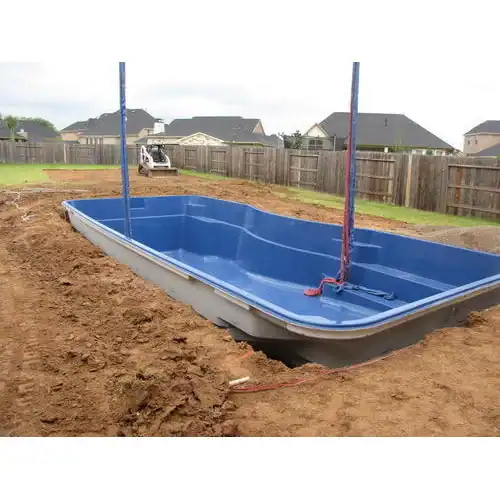
The Real Cost of a Fiberglass Pool
A fully installed inground fiberglass pool package in the local market generally ranges between KES 1,800,000 and KES 3,500,000+.
A. Above-Ground vs. Inground Layouts
- Above-Ground Fiberglass Installations: The prefabricated shell is placed on a level concrete pad without major excavation. Shells range from KES 600,000 to KES 1,500,000, with installation and plumbing adding KES 200,000 to KES 400,000.
- Inground Fiberglass Installations: These require full site excavation, a leveled sand or gravel support bed, structural backfilling, and a concrete ring beam around the edge. Total shell plus below-ground installation costs range from KES 2,200,000 to KES 3,500,000.
Advantages of Fiberglass Pools
- Rapid Installation Timelines: Because the fiberglass shell arrives pre-manufactured from the factory, the onsite workflow is incredibly fast. Once excavation is complete, lowering the shell, connecting the plumbing lines, and backfilling takes only a few days to two weeks.
- Low Chemical Maintenance: The interior surface features a non-porous gel coat finish. Algae cannot easily bond to this smooth barrier, allowing you to maintain crystal-clear water with up to 30% fewer chemicals compared to a concrete pool.
- High Energy Efficiency: The ultra-smooth gel coat reduces the friction coefficient of circulating water, allowing your filtration pumps to run shorter cycles while maintaining perfect clarity, lowering your monthly power bills.
Disadvantages of Fiberglass Pools
- Zero Post-Installation Modification: Once a fiberglass pool is cast in the factory and set in the ground, it cannot be modified. If you later decide you want a deeper deep-end or an extended shallow ledge, your only option is to completely excavate and replace the entire shell.
- Fixed Catalog Shapes: You are restricted entirely to the dimensions, depths, and shapes available in the manufacturer’s design catalog. If you have an awkwardly shaped plot or want a highly custom architectural design, fiberglass can feel too restrictive.
Comparing the Investment Lifecycle
| Feature | Concrete Pools | Fiberglass Pools |
| Material Construction | Reinforced Masonry (Onsite) | Prefabricated Gel-Coat Shell |
| Construction Duration | 8 to 12 Weeks | 1 to 3 Weeks |
| Chemical Consumption | High (Porous surfaces need tracking) | Low (Non-porous algae barrier) |
| Structural Flexibility | High (Any shape or depth) | None (Fixed catalog options) |
How to Execute Your Installation Sequence
Whether you choose concrete or fiberglass, a successful installation depends on a disciplined, step-by-step engineering timeline:
Phase 1.
Geotechnical Survey & Permitting:
Conduct a soil analysis to identify any black cotton or unstable foundation layers. Submit your architectural layout to local county planning offices for structural approval.
Phase 2.
Site Excavation & Base Preparation:
Heavy machinery digs out the exact footprint of your pool. For concrete, a stone base is laid; for fiberglass, a perfectly level gravel or sand floor is prepared.
Phase 3.
Shell Construction or Placement:
For Concrete: Steel rebar lines are tied and high-strength concrete is cast to create a single, seamless structure.• For Fiberglass: The pre-molded factory shell is lowered onto the site by a crane truck.
Phase 4.
Plumbing, Filtration, & Handover:
Connect your main drains, surface skimmers, and return inlets to the pump room. Fill the pool with water, balance the chemicals, and hand over the keys to the client.
Partner with the Leading Pool Experts in Kenya
There is no single “right” material for a pool; your choice depends entirely on your design goals, your budget, and how quickly you want to swim.
Neema Technologies is a leading civil engineering and structural contracting firm specializing in high-end swimming pool construction in Kenya. From our headquarters in Ruiru, our engineering teams handle everything, from structural soil adjustments and Eurocode-compliant concrete casting to importing and installing premium fiberglass shells. We ensure your pool is built to last, energy-efficient, and fully customized to your property.
Get a Professional Consultation Today
Ready to schedule an onsite soil evaluation or request an itemized Bill of Quantities (BQ)? Contact our project design office today:
- 📍 Headquarters: Ruiru, Kenya (Conveniently accessible along the highway)
- 📞 Direct Line / WhatsApp: +254 792 880966
- 📧 Project Inquiries: info@neematechnologies.co.ke
- 🌐 Official Web Portal: Explore Neema Technologies Swimming Pool Projects