
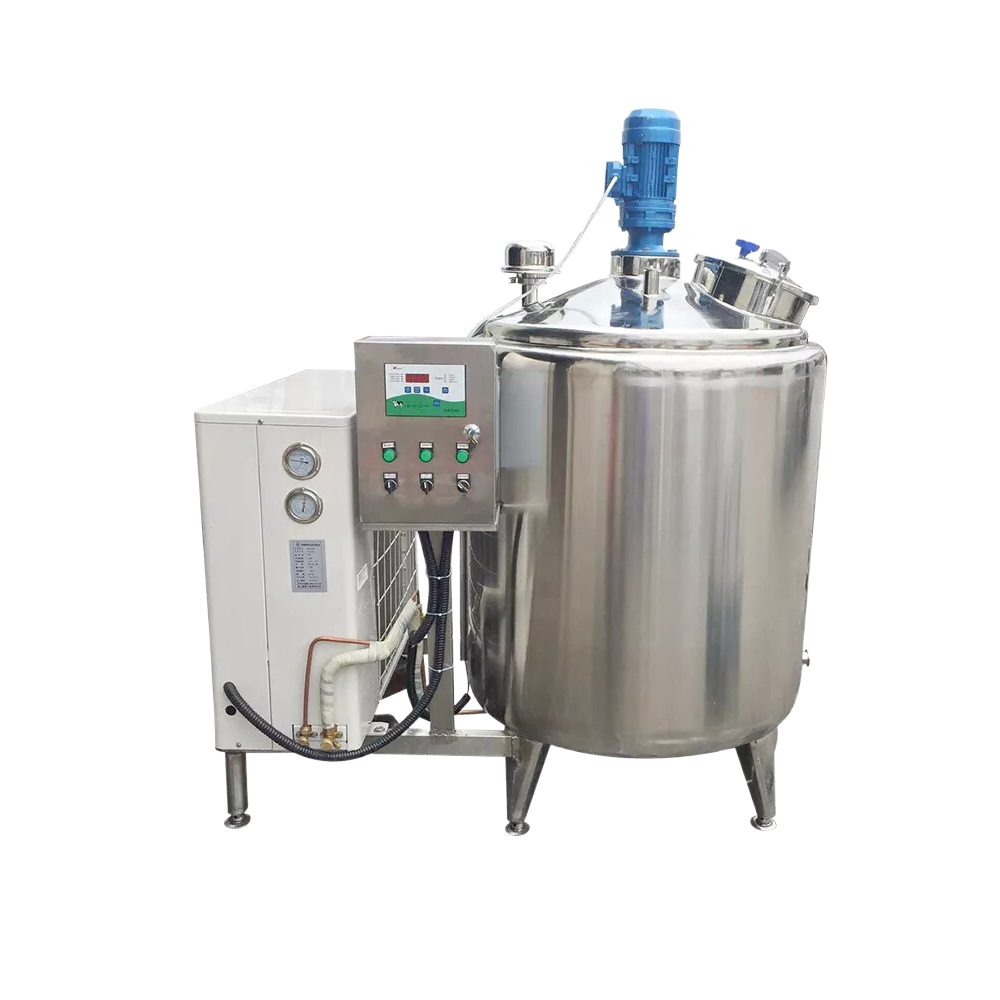
The Critical Importance of Milk Cooling in Dairy Farming
Raw milk leaves a cow’s udder at approximately $35^\circ\text{C}$—an absolute paradise for microbial growth. If left uncooled on warm days, bacteria counts can double every 20 minutes, accelerating spoilage, ruining taste, and turning a premium product into rejected waste.
When milk is only consumed at home, minor variations in batch quality might go unnoticed. However, running a successful commercial dairy enterprise demands consistent, high-quality output with a flawless taste and aroma. Maintaining a strict cold chain is the only way to safeguard your investment, maximize shelf life, and meet Kenya Bureau of Standards (KEBS) and Kenya Dairy Board (KDB) guidelines.
The Science of Milk Spoilage
Milk naturally absorbs environmental particles, bacteria, and barn odors. While immediate filtration after milking removes large physical debris, it is physically impossible to strain micro-organisms out of milk.
Instead, you must stop them from multiplying. Bacteria feed on milk sugars (lactose), proteins, and butterfats. As they consume these nutrients, they release lactic acid, causing the milk to sour, curdle, and fail quality tests at collection centers.
       [Fresh Milk: 35°C] ---> [Delayed Cooling] ---> [Bacteria Doubles Every 20 Mins] ---> [Milk Spoils/Rejected]
       [Fresh Milk: 35°C] ---> [Rapid Chilling]  ---> [Bacterial Stasis at 4°C]      ---> [Premium Grade Return]
Bringing the temperature down below $4^\circ\text{C}$ freezes bacterial reproduction. Every single degree of temperature rise above $4^\circ\text{C}$ triggers an exponential leap in bacteria count, aggressively cutting down the shelf life of your finished dairy products.
Why a Standard Domestic Refrigerator Fails
Many small-scale farmers try to store raw batches in a standard home refrigerator, only to experience spoilage anyway. Home fridges transfer temperature using static, cold air currents, which is an incredibly slow process.
Commercial bulk milk cooling tanks cool 20 times faster because they utilize indirect liquid-refrigerant heat exchange across food-grade stainless steel walls. Furthermore, automated cooling tanks feature built-in mechanical agitators (stirring paddles). Constant, gentle stirring offers two major advantages:
-
It eliminates thermal stratification, ensuring the milk in the very center of the tank is chilled just as quickly as the milk touching the outer walls.
-
It prevents cream separation and localized freezing, which can fracture milk fat globules and ruin the texture.
Core Operational Rules for Premium Dairy Quality
To preserve raw batches successfully before pasteurization or transport, embed these 3 critical boundaries into your daily milking routine:
-
The 30-Minute Rule: Rapidly chill raw milk from $35^\circ\text{C}$ down to below $4^\circ\text{C}$ within 30 minutes of extraction.
-
The Storage Standard: Lock and maintain a stable holding temperature exactly at $4^\circ\text{C}$ to preserve milk structure without freezing it.
-
The Danger Zone: Never let the storage temperature spike above $7^\circ\text{C}$ during subsequent batch additions.
Energy Optimization Tip: Cooling infrastructure makes up a major portion of your farm’s daily utility bill. Opting for Direct Expansion (DX) cooling setups with thick polyurethane foam (PUF) insulation limits how often your compressor needs to cycle, cutting down overall farm energy overheads significantly.
High-Performance Milk Chillers from Neema Technologies
Protect your commercial yields by investing in a high-grade chilling setup built for the unique demands of local dairy collection.
Neema Technologies manufactures and supplies heavy-duty, food-grade 304 stainless steel bulk milk coolers and chillers across Kenya. Our systems feature precision digital control panels, automated anti-freezing agitator motors, and robust built-in condensing systems engineered to maximize your margins.
Explore Our Capacity and Pricing Range
| Chiller Tank Capacity | Average Pricing Bracket | Target Operation Scale |
| 150 Liters | $\text{KES 200,000} – 210,000$ | Small-scale intensive dairy shops & startups |
| 300 Liters | $\text{KES 320,000} – 340,000$ | Emerging micro-cooperatives & mid-tier farms |
| 500 Liters | $\text{KES 500,000} – 530,000$ | Established dairy farms & collection stations |
| 1,000 Liters | $\text{KES 800,000} – 840,000$ | Large agricultural centers & distribution hubs |
Contact Our Technical Sales Team
Ready to upgrade your farm infrastructure, stabilize your batch quality, and command premium market prices? Get in touch with Neema Technologies today for equipment quotes, workshop delivery timelines, and dedicated after-sales support:
-
📍 Workshop Headquarters: Ruiru, Kenya (Along the main highway)
-
📞 Direct Phone / WhatsApp: +254 792 880966
-
📧 Official Email Inquiries: info@neematechnologies.co.ke
-
🌐 Website: Explore Neema Technologies Dairy Engineering Solutions